Lessons Without Walls: A Worldschooling Family's Journey
Educating Ever and River one destination at a time

His little legs wobbled as he climbed each uneven stone step, his face a mix of determination and excitement. Fellow travelers offered words of encouragement to the youngest adventurer they could see visiting the world wonder that day, cheering him on as he neared the summit. Tears welled in my eyes when a kind man gently patted my shoulder. “Well done,” he said simply, yet those two words carried a weight of recognition I hadn’t realized I needed—an acknowledgment of the years we’d spent journeying the world with our children.
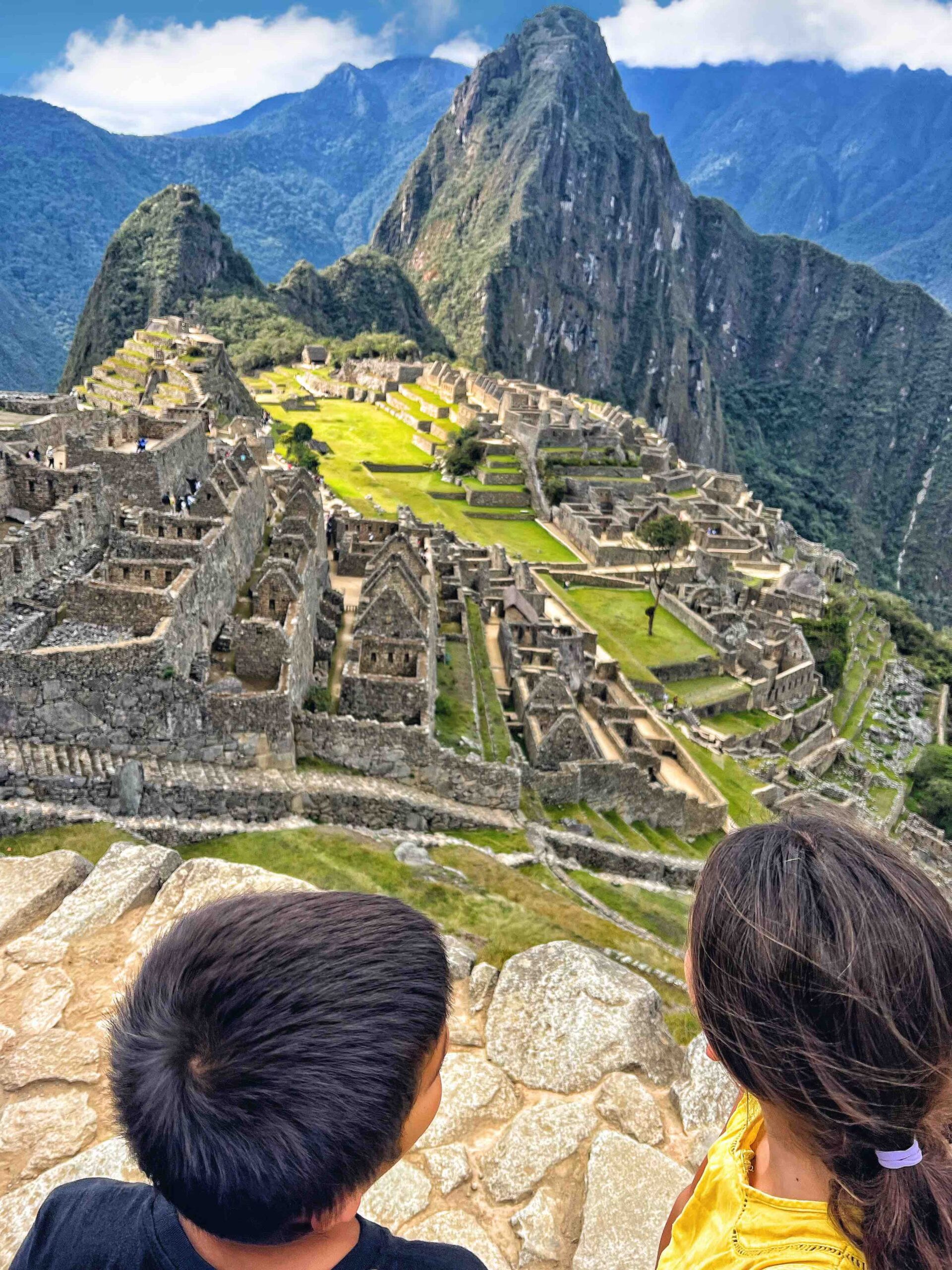
I held our eight-year-old daughter’s hand as she bounded up the final few steps, sprinting toward the edge, eager for that iconic view. She squealed with delight, jumping in place as Machu Picchu’s mesmerizing scene unfolded before her—more breathtaking than any video or photo, and absolutely worth the flight, the train ride, the bus journey, and the long climb to reach it. River, just six years old at the time, stood beside her, his baby face flushed with fatigue, yet his eyes sparkled with wonder. The site was quiet that morning, allowing us to wander through the ruins at our own pace, an ancient playground for our children. We paused on grassy expanses, soaking in the beauty, and talked about the Incas, their traditions, and the many mysteries of Machu Picchu. It was the pinnacle of our Peruvian adventure after months of adapting to the local food, culture, and altitude. Our children had bartered for crystals in Sacred Valley markets, visited alpaca farms, woven blankets with local artisans, helped prepare pachamanca at a rural farm in Ollantaytambo, explored ancient Incan rituals at museums, climbed the sand dunes of Huacachina, fed wild alpacas at Lake Titicaca, and even celebrated Halloween with new friends in Cusco’s historic center. Now, several years later, both Ever and River still speak vividly about that day—and their time in Peru. A rich experience only worldschooling could provide.
Worldschooling wasn’t always the plan.
But after traveling with Ever and River as toddlers, we saw the profound impact the world had on them, and slowly we saw a way of life that fit our family.
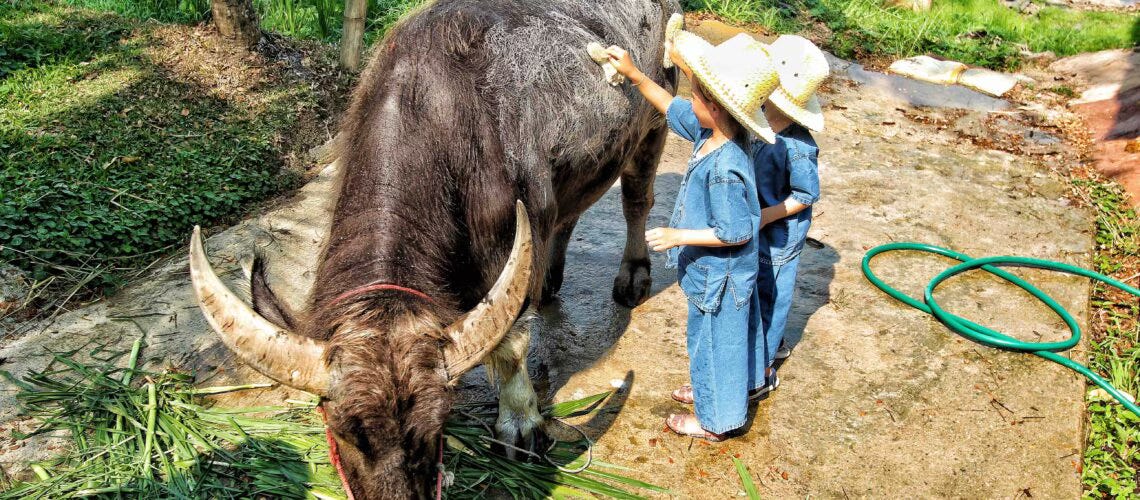
March 2020—the month the world stood still—we were in Thailand, preparing to celebrate River’s fourth birthday in Chiang Mai. The day began with a luxurious breakfast, a peaceful swim, and an afternoon spent learning how to plant and harvest rice in the resort’s private paddy fields. I watched Ever and River feed tamarind to the resident buffalo, both dressed in traditional farmer attire, their oversized straw hats slipping over their eyes as they giggled and hosed down the buffalo. Then my phone began to ring—again and again. Borders were closing in Hong Kong and Taiwan, and unless we boarded a plane in the next two hours, we wouldn’t be able to return home.
We decided to stay.
Rushing two young children through crowded airports and uncertain borders felt wrong. How long could it last? We thought—naively—a few weeks. Two years later, we found ourselves in Peru, still roaming.
Ever was meant to begin formal schooling in September 2020, but after years on the road, we realised traditional education no longer fit our family’s rhythm.
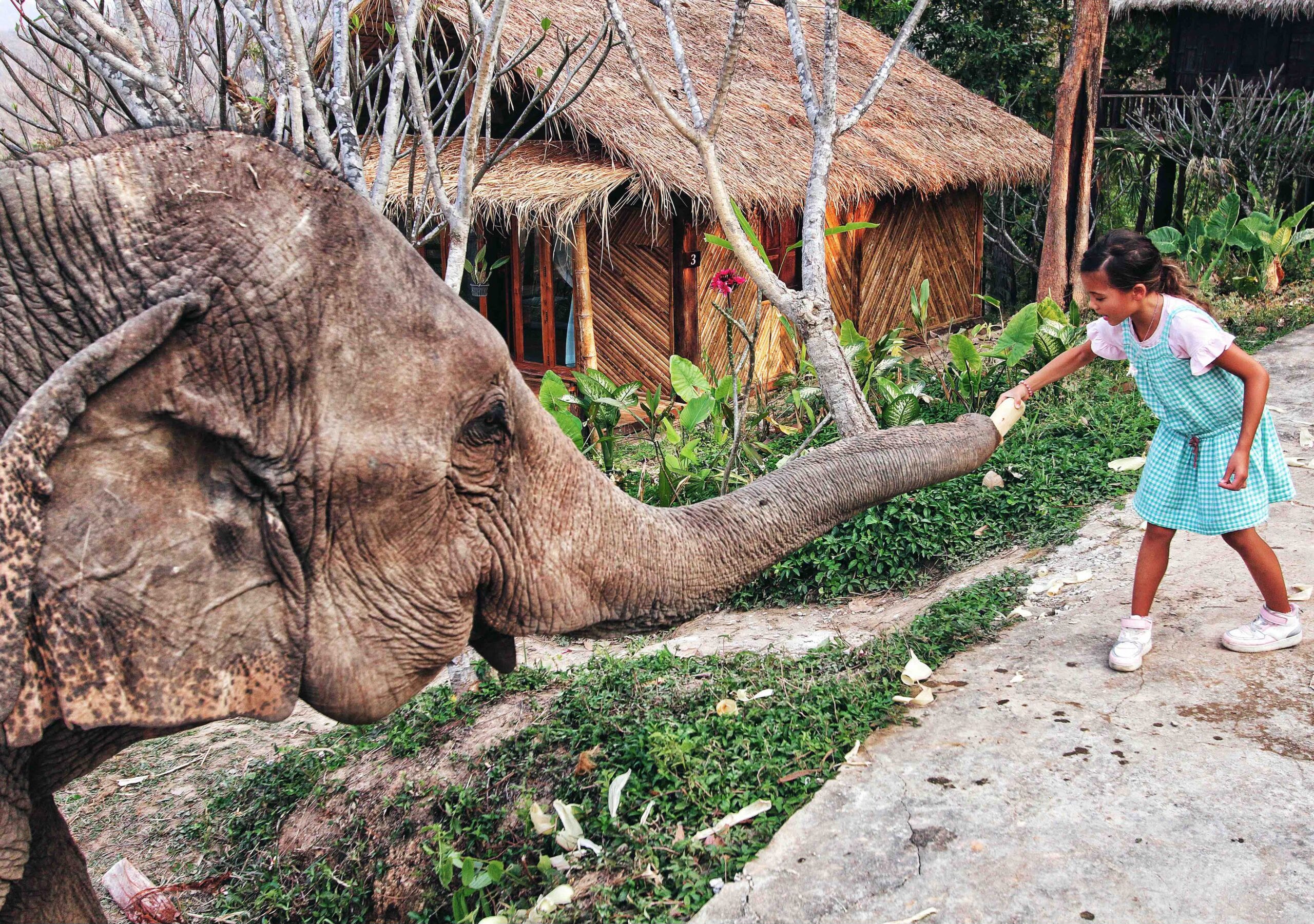
Between March 2020 and March 2023, our children lived among elephants in the mountains of Chiang Mai, learning their gentle ways. We rented a beach hut on the shores of Koh Phangan, embracing a slower, simpler way of life: early mornings with breakfast in the sand, barefoot days, local food stalls, kind strangers, and nightly sunsets as a family. The majority of their day was outdoors not stuck between the four walls of a classroom. We spent months exploring every corner of Thailand—marveling at hidden temples, experimenting with new recipes and spices, and finding tucked-away spots visited mostly by local tourists.
Still unable to return home, we set our sights on the Maldives.
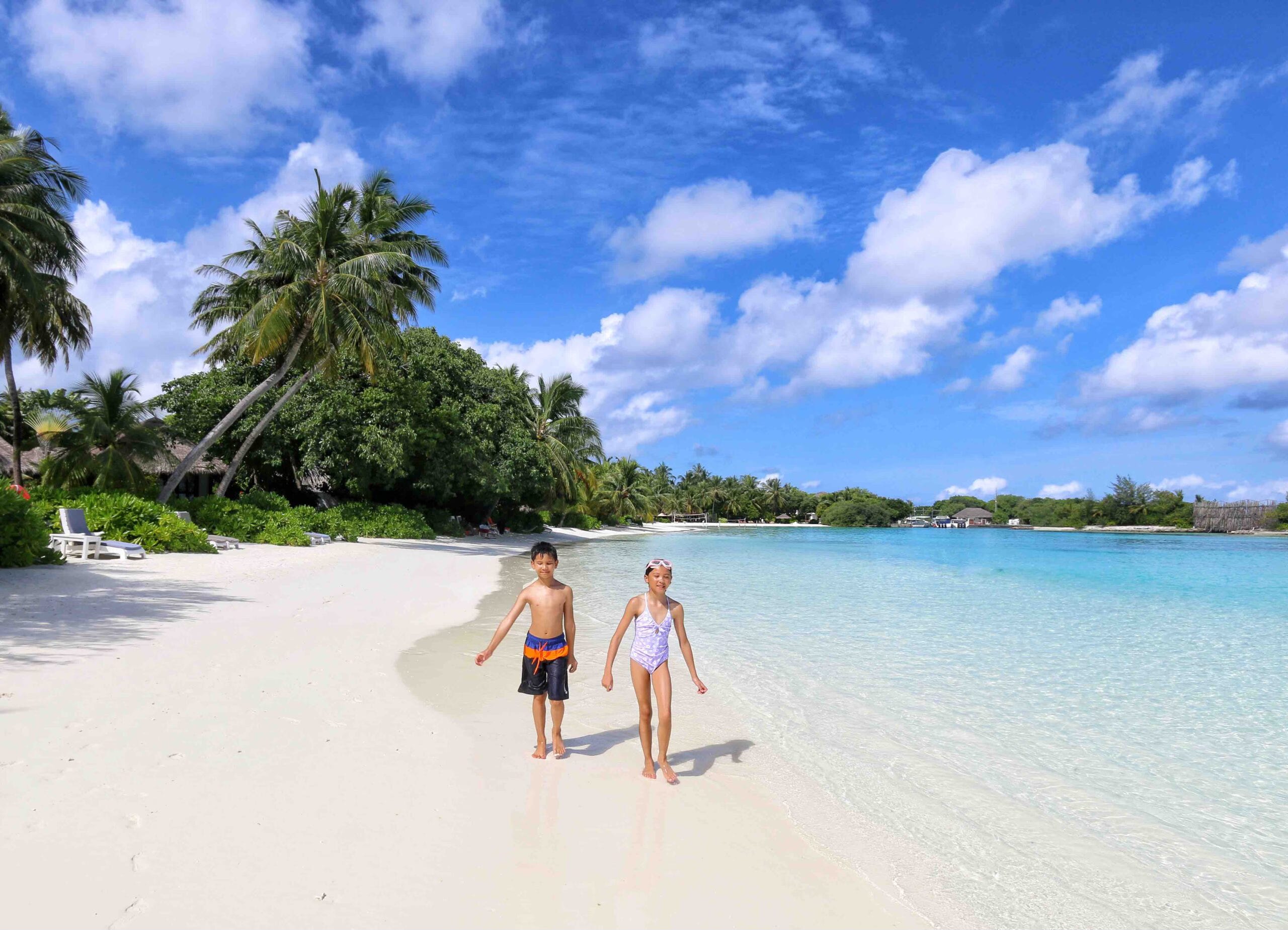
There, Ever and River fell in love with marine life. They learned how climate change is threatening the coral reefs and took part in coral planting initiatives. To this day, the team still sends Ever updates and photos of the coral they helped plant. They had long conversations with marine biologists—what River affectionately calls “fish meetings”—and developed a deep respect for the ocean. They snorkeled with mantas, turtles, and nurse sharks, and joined weekly dolphin cruises at sunset. By the end of our stay, they could name nearly every fish they encountered and began to think of the islands as another home.
A return to the United States helped reconnect them with their American roots. New York City can overwhelm the senses, but they adapted quickly. Dollar slices of greasy pizza, concrete playgrounds, artisanal hot chocolates, endless visits to the Natural History Museum, and afternoons spent exploring each neighborhood became part of our everyday life. We spent time in Los Angeles discovering quiet corners along the Pacific Coast Highway, marveled at Colorado’s captivating landscapes, and skied the world-renowned slopes of Aspen and Vail.
Next came the Dominican Republic, where we spent weeks along the coast attending surf camps. Ever and River took to the waves instantly. They adored their local instructors and embraced the warmth and vibrancy of Dominican culture. We traveled across the island, eventually ending up in Costa Rica, discovering small coastal towns still untouched by mass tourism.
Mexico was another highlight. A road trip through the Riviera Maya led us to limestone caves and magical cenotes, and brought us to colorful, history-rich cities like Valladolid and Merida. Mexico City, with its buzzing energy, deep culture, and unforgettable food scene, made it especially difficult to leave.
Through worldschooling, Ever and River have experienced the pulse of cities like Madrid, Rome, New York, Mexico City, Paris, Tokyo, Medellín, and Amsterdam. They’ve also ventured into remote corners of the world—small islands in the Philippines, a tour through Cambodia, and weeks exploring South America. They learned about World War II while visiting the actual historical sites in Europe. Ever, our creative dreamer, developed a deep appreciation for impressionist art, especially Degas’s ballerinas. Japan became another favorite, with long stays in Kyoto, Tokyo, and Hokkaido. The quiet beauty, respectful customs, and kind people made it feel like a second home.
All the while, they’ve followed a consistent curriculum and often tested well above their grade level.
It’s often assumed that because we travel full-time, Dan and I must not care about traditional education. That we’re unconcerned with grades, benchmarks, or our children reaching academic milestones. But that couldn’t be further from the truth.
For reference, both Dan and I excelled in school. Good grades were never the issue. But in our many conversations, we came to the same conclusion: we both found school... mundane. We were rarely challenged, and it didn’t take long for us to grasp most concepts. Our concern with conventional education isn’t rooted in rebellion, it’s that children learn at different paces, and the standard classroom model, through no fault of the teachers, rarely accommodates that. We all absorb information differently, and tailoring an experience to each child’s individual learning style within a system designed for uniformity is nearly impossible.
Ever and River have shown many of the same traits we did growing up. They’re curious, self-motivated, and, for the most part, easy to teach. With Ever, we followed a traditional path at first: phonics, then sight words, progressing through the typical American system for early literacy. She picked it up quickly, reading fluently by age four and diving into novels by six. Today, she writes elaborate stories and thrives in her online English Literature classes.
River, however, wasn’t interested in phonics drills. He found the repetition frustrating, so we shifted to a learn-through-play approach—often called “unschooling.” We read signs and menus aloud together, wrote words in the sand, and ensured any cartoons had subtitles. At times, it felt like he’d never catch on, and then one day, at five years old, he read a full BBC News article over Dan’s shoulder, completely out of the blue. We were stunned. It was a beautiful reminder that learning doesn’t always come from textbooks, it often comes from life.
They learn math through practical experiences: budgeting their allowances in USD, converting currencies depending on the country we’re in, and making real-world purchases. Alongside these lived lessons, we incorporate traditional academics using workbooks and printable assignments from Twinkl. As they got older, we added structured elements—live classes on Outschool, and now Ever, our eldest, is enrolled in a full-time virtual school where she’ll earn the same credentials we did at our elite British private schools.
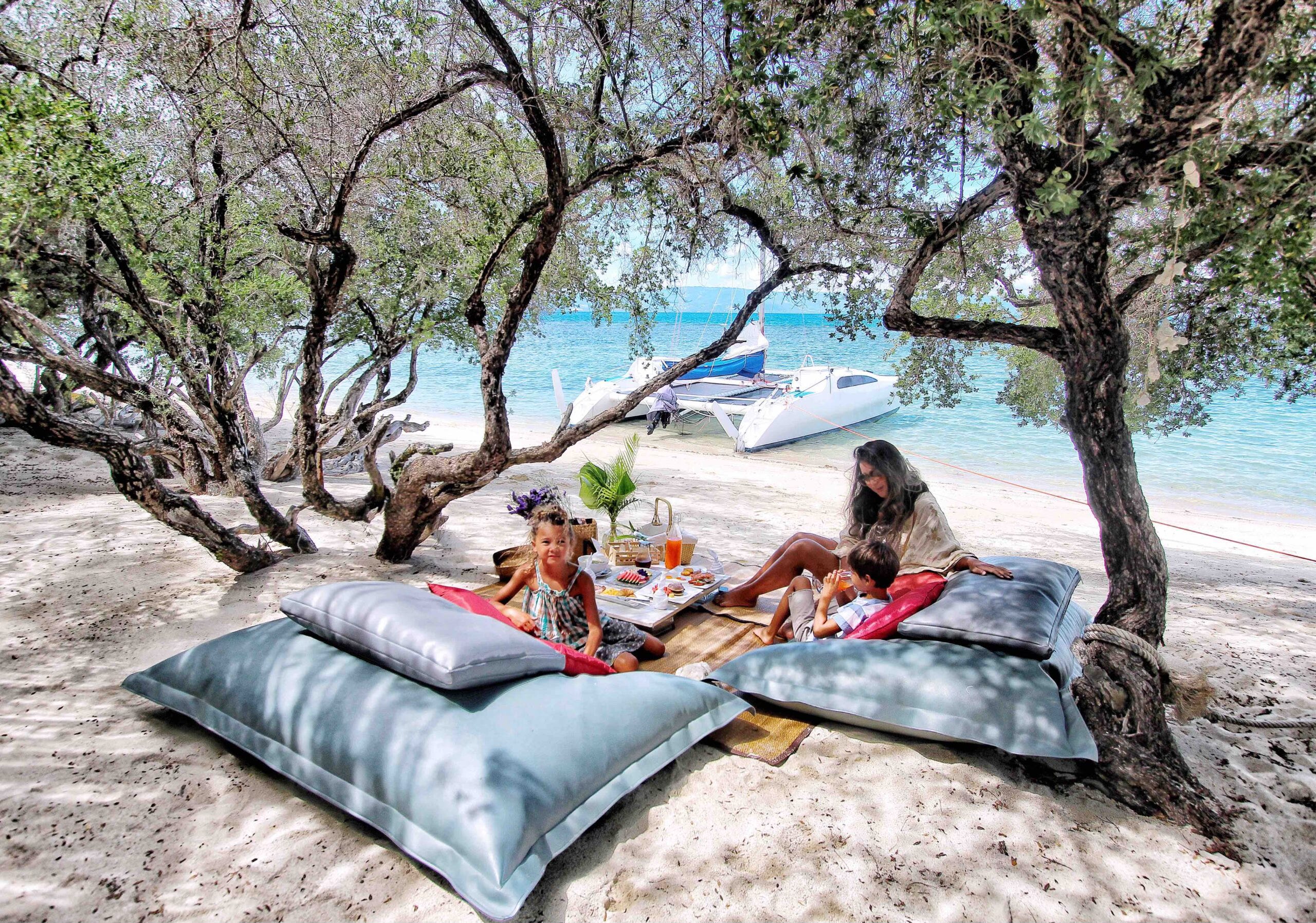
That’s not to say worldschooling comes without challenges. In fact, one of the hardest parts has nothing to do with logistics, it’s the disapproval from others. Choosing an unconventional path can unintentionally feel like a judgment to those living more traditionally. We’ve come to accept that, and we often remind people: this lifestyle works for us, but it’s not for everyone. Every family must find their own rhythm. If your child thrives in school, then that’s what’s best for them. We’re not here to prove anything, we’re just following what feels right for our children and for us.
Another challenge we face is finding balance. A constant life on the road can easily lead to burnout. There’s always more to see, more to do—and in a family of four who all suffer from a bit of FOMO, slowing down doesn’t come naturally. We prioritise our children, teaching them about the world, nurturing empathy, and supporting their education, but that often means our own needs get pushed to the background.
Our community? More often than not, it’s just the four of us.
We’re incredibly close with our extended families and prioritize visits as much as possible, but building lasting friendships on the road is difficult. As we continue raising our children in such a unique way, we sometimes find we have less and less in common with others. Misunderstandings happen easily, and explaining our choices repeatedly can be exhausting. In many ways, we’ve learned to lean on each other. We are our own support system.
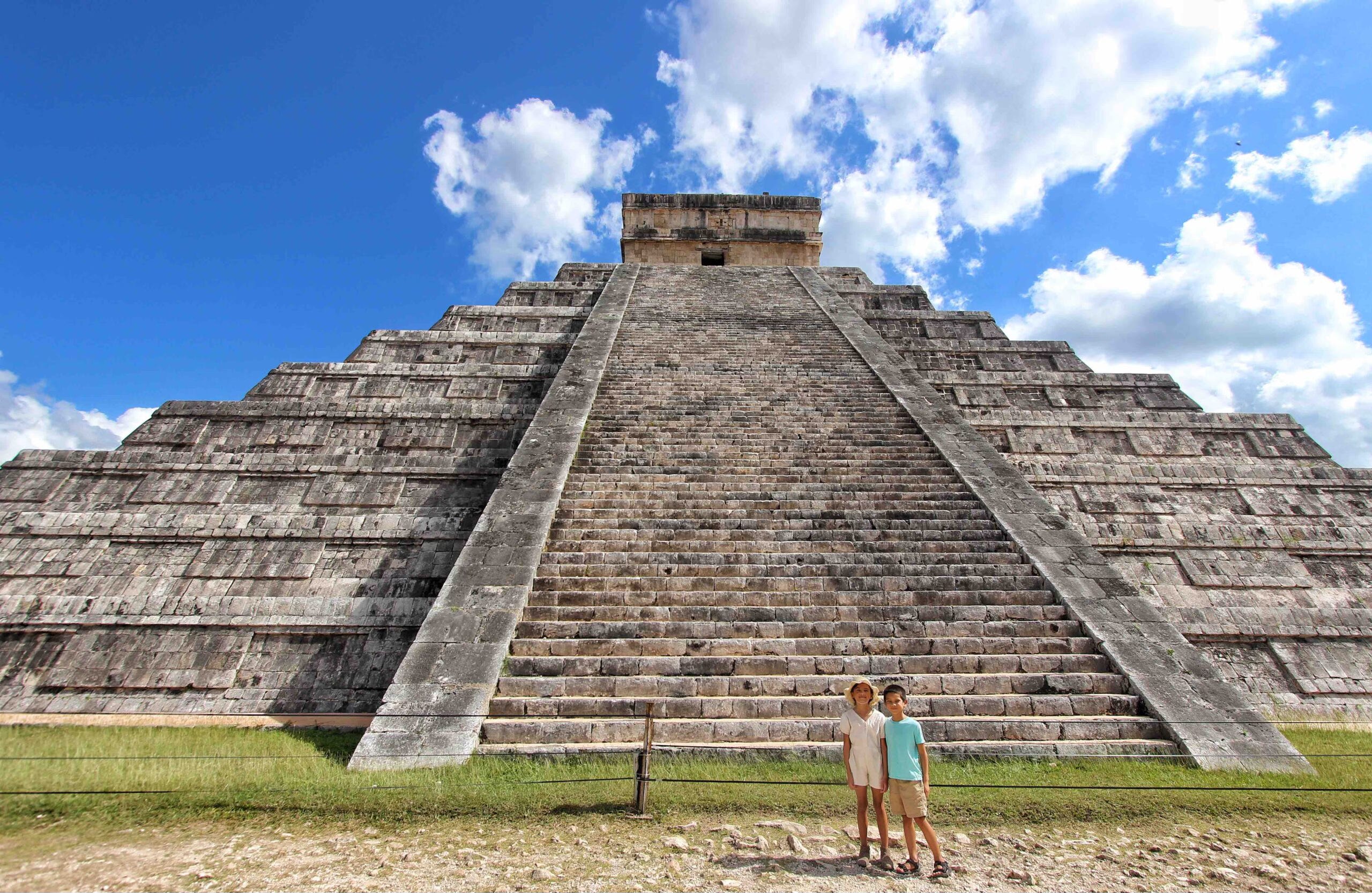
Even with the challenges, we constantly remind ourselves why we chose this path. These years with our children are fleeting. We believe we were given the gift of raising them so we could offer a life rooted in joy, confidence, and curiosity. More than anything, we hope to raise kind and empathetic humans, people who care deeply about the world and its people.
Yes, we could travel only during school holidays, but worldschooling has offered us something far deeper. It has bonded us in a way that traditional routines never could. As children of divorce and boarding school, Dan and I often felt disconnected growing up. We want something different for our family.
Our goal has never been to check places off a list. We want to be more than tourists. Slow travel gives us the time to truly understand a place, to look beyond first impressions, and to break through assumptions. We make efforts with the language, take part in local customs, try unfamiliar foods, and allow ourselves to be changed by the places we live. Each week brings new discoveries, quiet corners, favorite dishes, unexpected friendships, and when we leave, it often feels like we’ve left a little piece of our hearts behind.
This way of life has built deep empathy in Ever and River and to be honest ourselves. As they form connections around the world, they begin to understand that compassion shouldn't stop at their own street or country. It’s a lesson we hope stays with them, one that might help shape a kinder, more peaceful world.
To be honest, I never imagined I’d become a worldschooling mother. I’ve always been relaxed, a little indulgent—a luxury-loving shopaholic who enjoys the finer things in life. I pictured myself living in Notting Hill, New York City, or Hong Kong, with my children in private school while I lunched with close friends. I imagined Dan and I prioritising romantic weekends away, our children cared for by a nanny. It was a life that felt inevitable and would be more readily understood by my social circle.
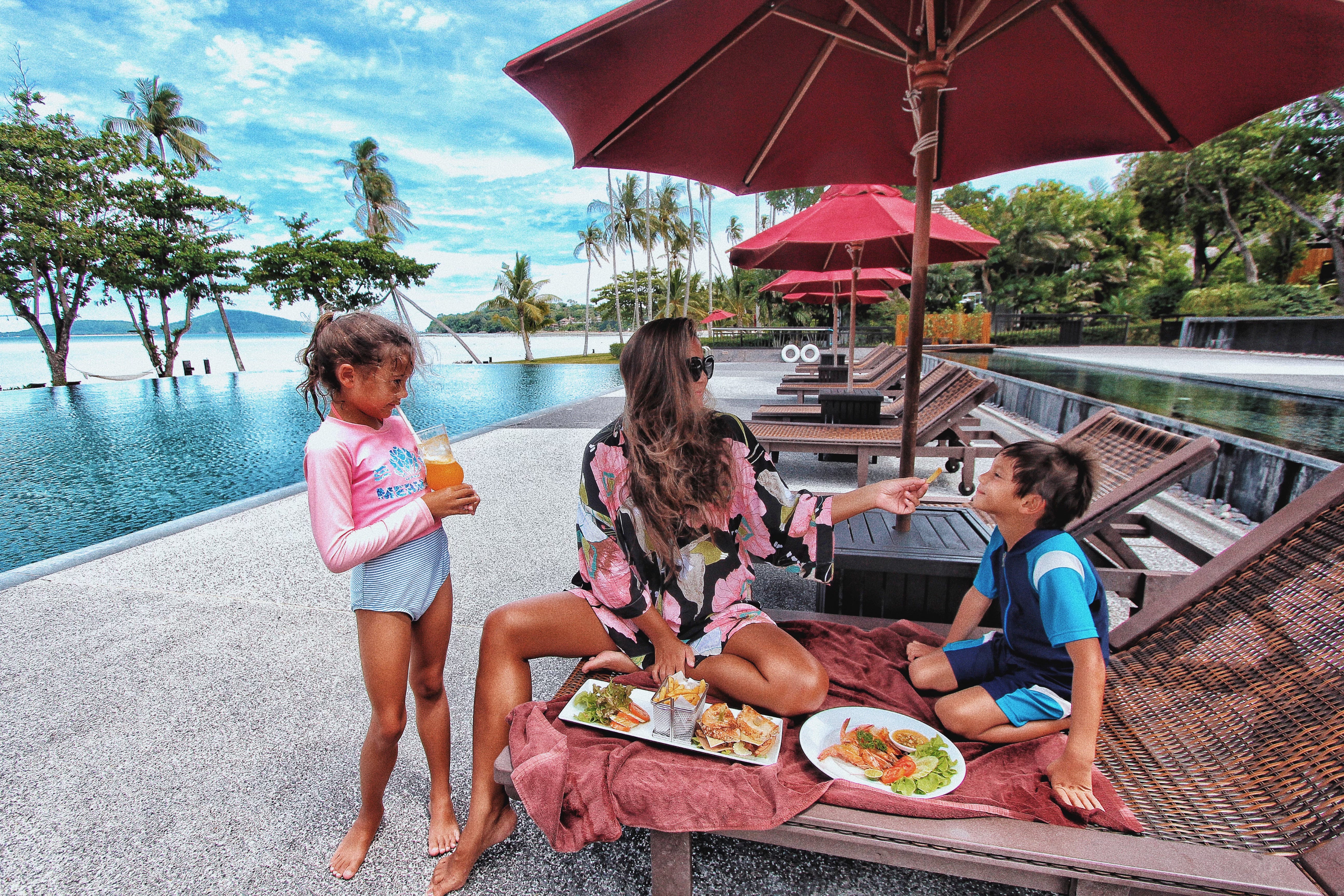
But motherhood changed me.
The idea of school interviews for my two-year-old felt absurd. The thought of my children navigating the confusion of being third culture kids, while also dealing with bullying, body image pressures, and the social anxiety that can come with rigid school environments stirred something protective in me. I began caring less about appearances and more about intention. I started thinking deeply about the kind of humans I wanted to raise. I found myself drawn to minimalism, to sustainability, to giving our children a wider lens on the world.
I didn’t want them caught in a cycle of comparison, defined by a single postcode or peer group. I wanted their world to be bigger, their values broader, and their sense of self built on more than fitting in.
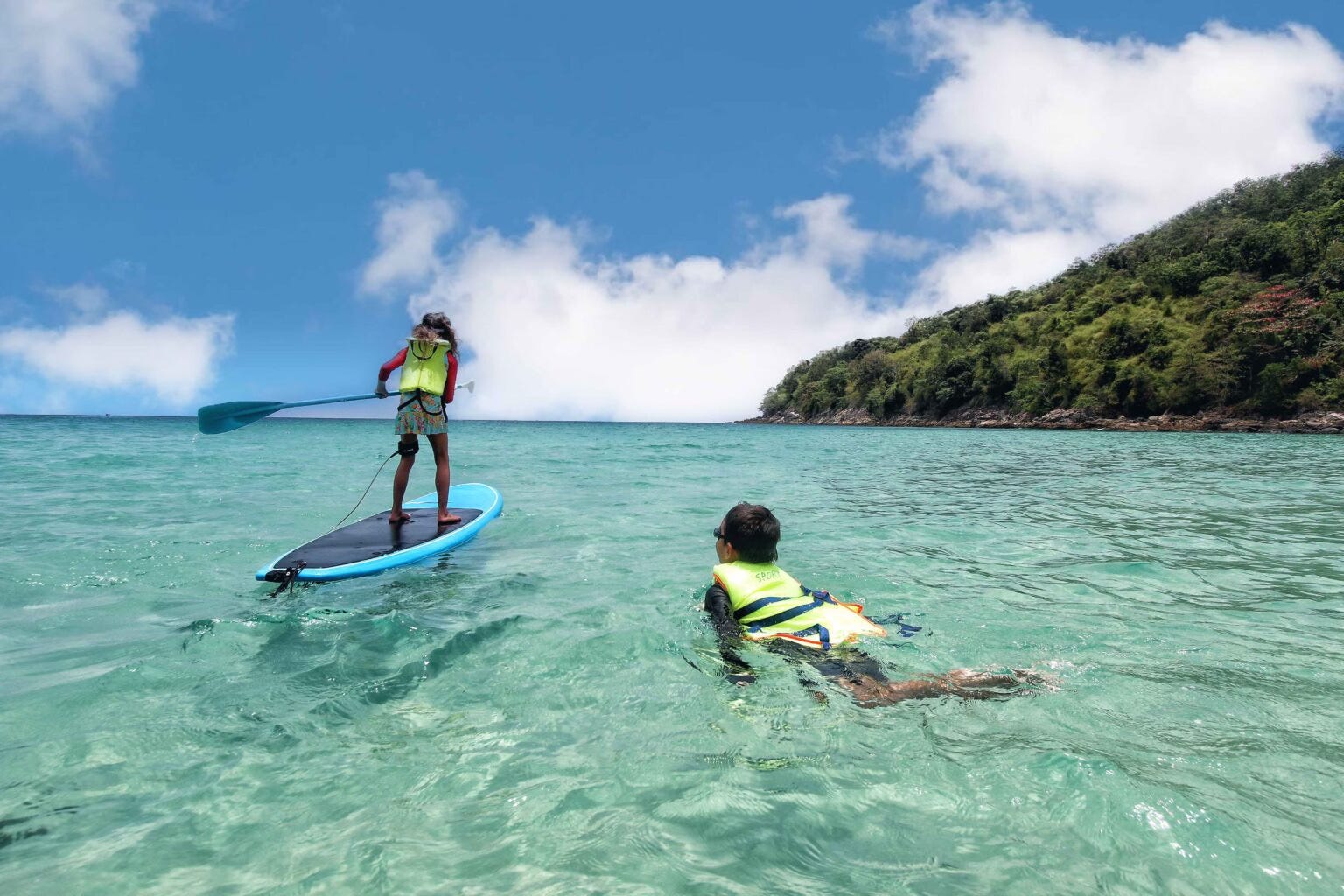
I began to see the wonder in their eyes each time we arrived somewhere new, and I wanted to recreate that magic again and again. As a mother, I’ve felt time moving faster than I ever expected, and with it, a deep responsibility to shape their childhood with care. I wanted to offer them a safe, expansive start to life, so that when they step into the world on their own, they’ll do so as confident, kind adults but also knowing they can always come back to us, their home.
Our last month in Brazil stole our family’s hearts.
Now well-traveled, Ever and River sat together on the long-haul flight, finishing writing assignments, playing games, and buzzing with excitement about seeing a new country. They couldn’t wait to sample new food, meet new people. We spent lazy beach days on Ipanema devouring açaí, bargaining for bracelets and Brazilian flag blankets, and taking surf lessons at the resident surf schools. No one spoke a word of English, and we didn’t speak Portuguese, but kind smiles and simple gestures made it one of our favorite places in the world.
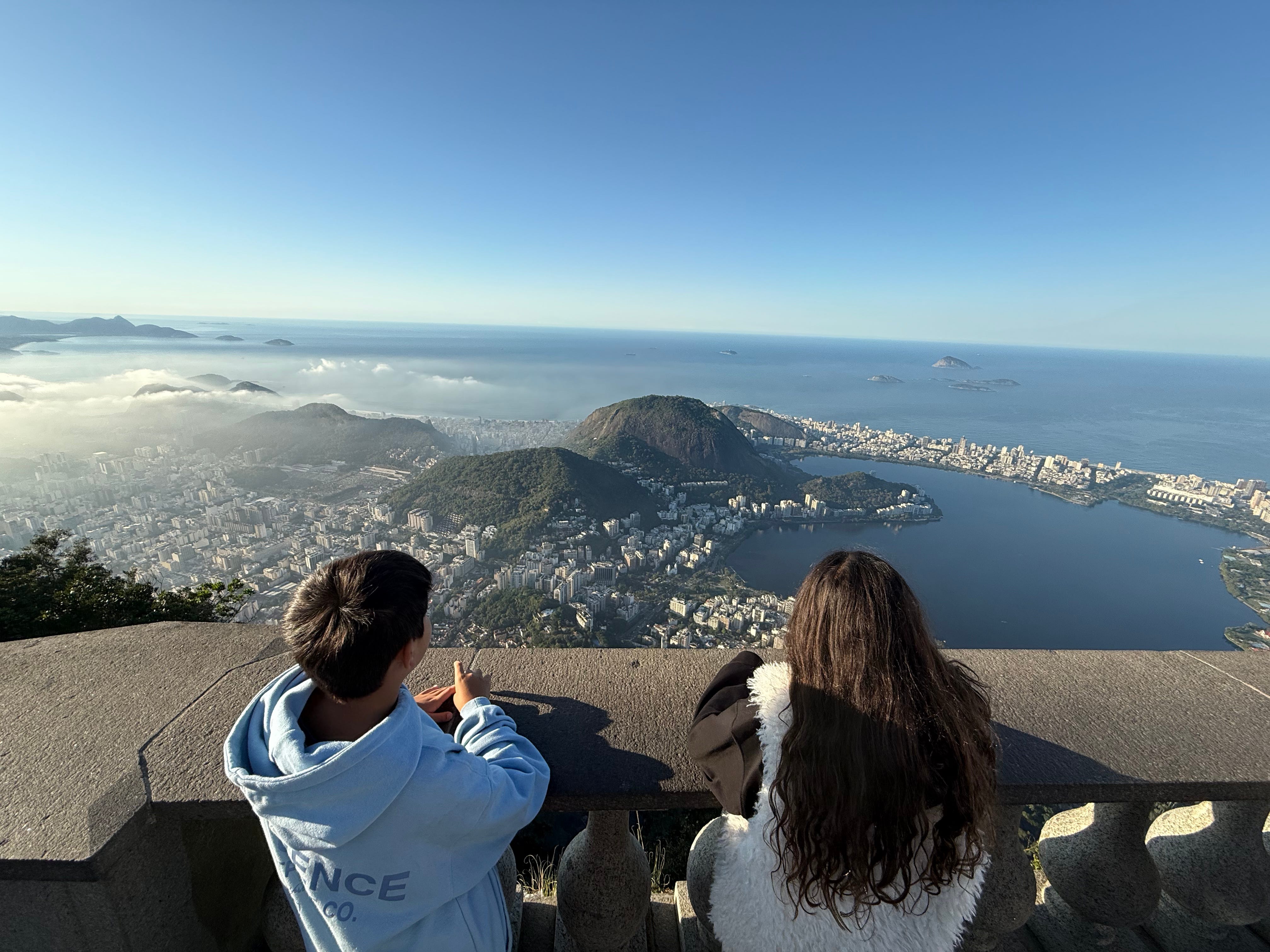
At sunset, we climbed the rocks at Arpoador, where River tried to convince Dan he should be allowed to cliff jump—an argument he didn’t win. He eventually settled for kicking around a football with local kids while the lights shimmered over Copacabana. We indulged in traditional Brazilian churrasco, and of course, visited Christ the Redeemer, our family’s fourth world wonder. As the clouds parted at the viewpoint and Rio de Janeiro stretched out before us, I sent up a silent thank-you to whoever allowed us to live this unforgettable life.
Even with the tears, the doubts, the exhaustion, and the moments of fear—I wouldn’t change it for the world. Because this isn’t just a way of educating our children, it’s a way of living. And it’s the greatest adventure we’ve ever chosen.
What a truly amazing life your children are living. Reading your experiences has put tears in my eyes and makes me wish all children could learn this way. Wonderful parents who have raised wonderful children. Cannot wait to see the progression. ❤️❤️❤️❤️
I felt like I was transported to all the magical places you’ve visited. This is such a powerful reminder that there’s no one “right” path - only the one that’s right for your family. It plants seeds of possibility: to choose how you want to be a present parent, rather than just follow what society expects.
I’ve witnessed your kids grow from birth into the deeply thoughtful, well-rounded souls they are today - something no traditional system could ever replicate. I’m so glad you’re sharing your story here… it honestly reads like the beginning of a children’s book series I’d love to gift to every curious family. 💛